20/07/2026

Padel Court Construction, Cost, and Padel Court Manufacturer
In recent years, padel has been growing not only as a new racket sport but also as an attractive investment area for clubs, hotels, residential complexes, schools, and real estate projects. According to June 2026 data from the International Padel Federation, the sport has reached approximately 38 million players, 85,000 courts, and 27,000 clubs across 178 countries and regions. This growth shows that a padel facility developed in the right location and with the right operating model can become a strong community and revenue center.
However, a successful padel investment is not merely about purchasing and installing a padel court. Demand analysis, land or building suitability, permits, groundworks and drainage, structural calculations, lighting, social areas, financing, working capital, and selecting the right padel court manufacturer are all parts of the same decision-making system. Confusing the court price with the total project cost required to be ready for opening is one of the most common mistakes investors make and one of the factors that most negatively affects the payback period.
This guide has been prepared for investors who want to evaluate a padel investment from the initial idea through opening, understand the padel court construction process, classify cost items correctly, and compare manufacturer proposals.
Therefore, the investment decision should be centered not on a single product but on assumptions that validate one another. The location should support demand, the permitting route should be feasible, the engineering solution should withstand local conditions, and the operating plan should reflect actual customer behavior. At every stage, the investor should ask, “What document, measurement, or sales evidence supports this information?” Such an approach does not slow down the project development process; on the contrary, it reduces scope changes, delays, and unexpected costs that may arise later. The best result is achieved when the design, procurement, finance, and operations teams make decisions using the same feasibility file. It is strengthened by clarifying responsibilities in writing from the outset. This approach makes the investment decision measurable, comparable, and auditable; it increases confidence.
Why Is Padel Investment Attracting Interest?
Padel's commercial strength lies in its more accessible learning curve compared with many racket sports and the social playing experience it offers. Since a standard doubles game is played by four people, the hourly court fee can be shared among the players. This structure both creates an affordable price per user and gives the facility an opportunity to reach four customers with a single booking.
The investment model does not have to depend solely on court rental revenue. Ancillary revenue streams can be created through lessons and academy programs, memberships, level-based leagues, tournaments, corporate events, racket rentals, equipment sales, sponsorships, and food and beverage. However, none of these revenues should be assumed automatically without evidence of demand. A sound financial model calculates court revenue and ancillary revenue separately and uses realistic occupancy, price, and cost assumptions for each.
A padel facility is also a strong community product. When players can find partners at their level, participate in regular leagues, and enjoy a seamless booking experience, the repeat rate increases. Therefore, the success of the investment depends not only on the quality of the steel, glass, and turf but also on the pre-opening player community, coaching team, and operating discipline.
What Is a Padel Court and What Are Its Basic Dimensions?
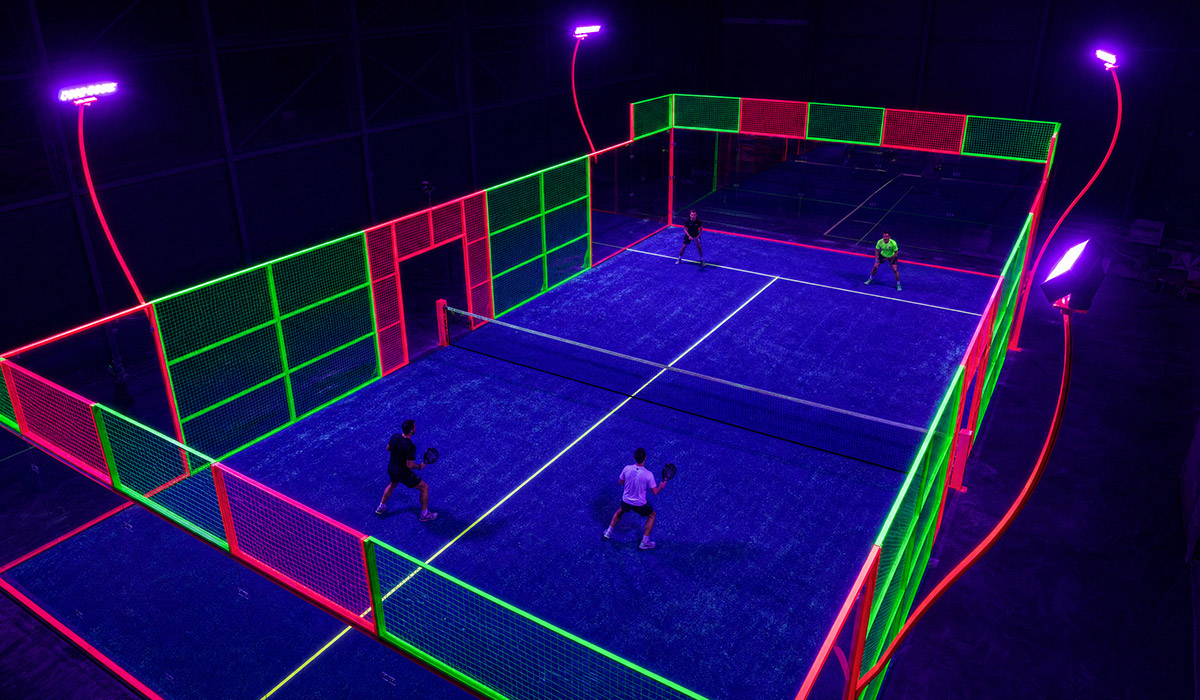
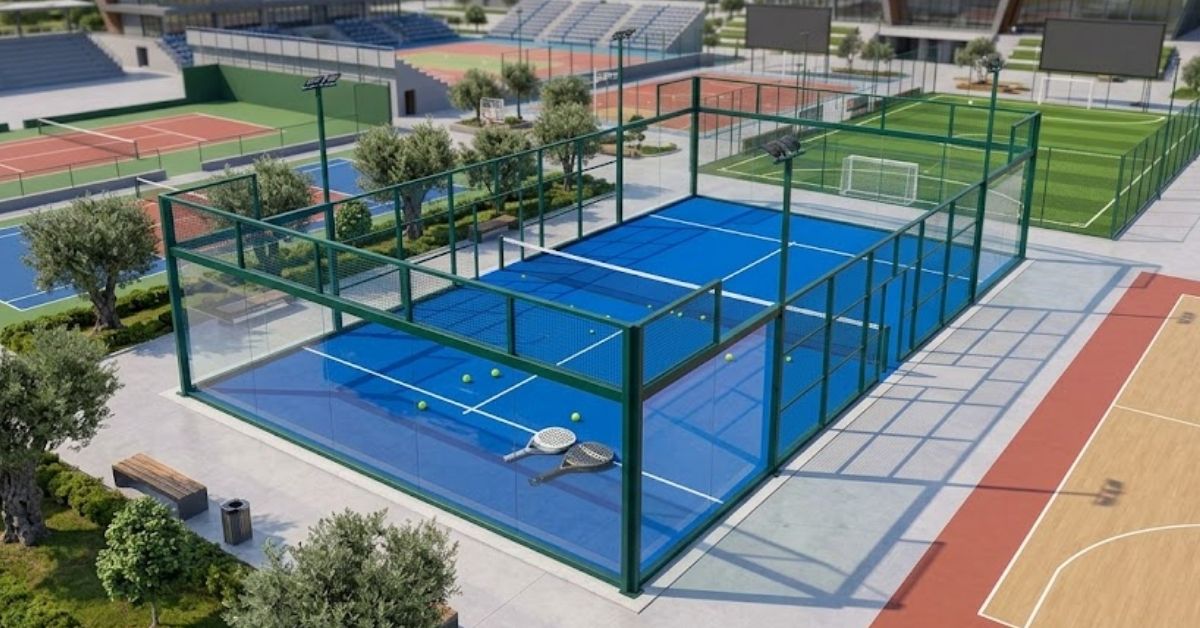
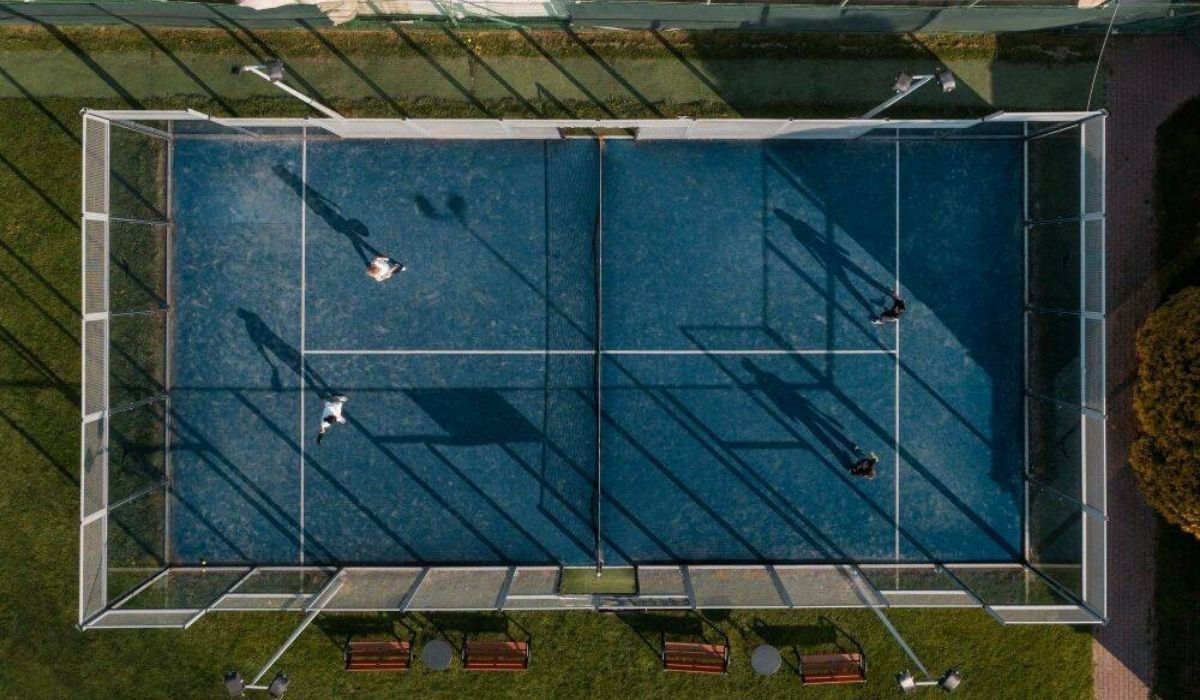
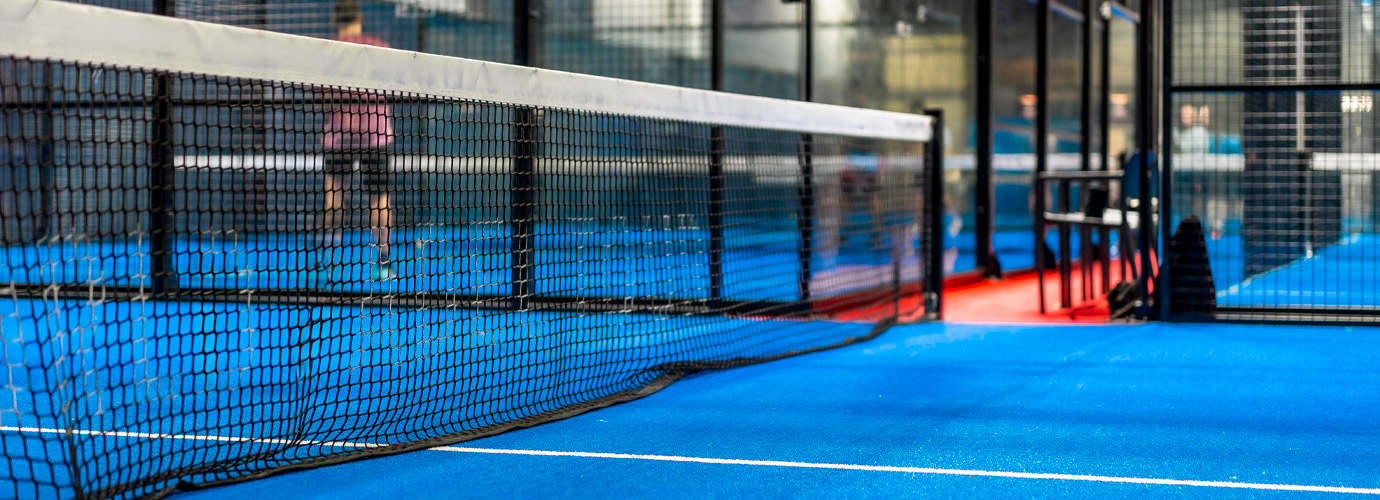
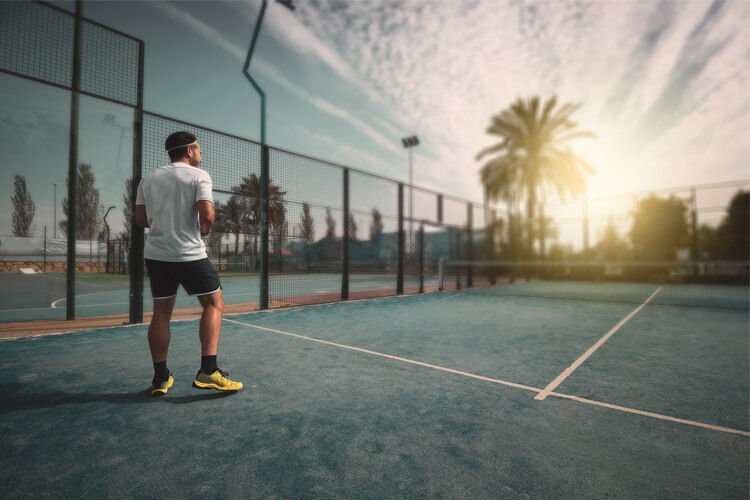
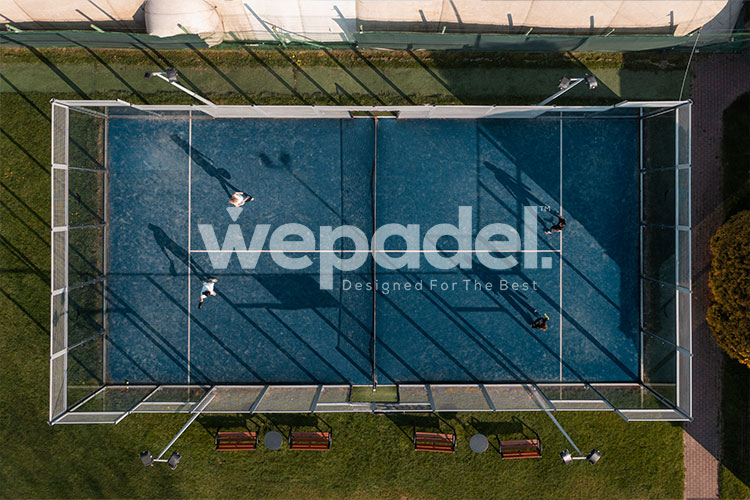
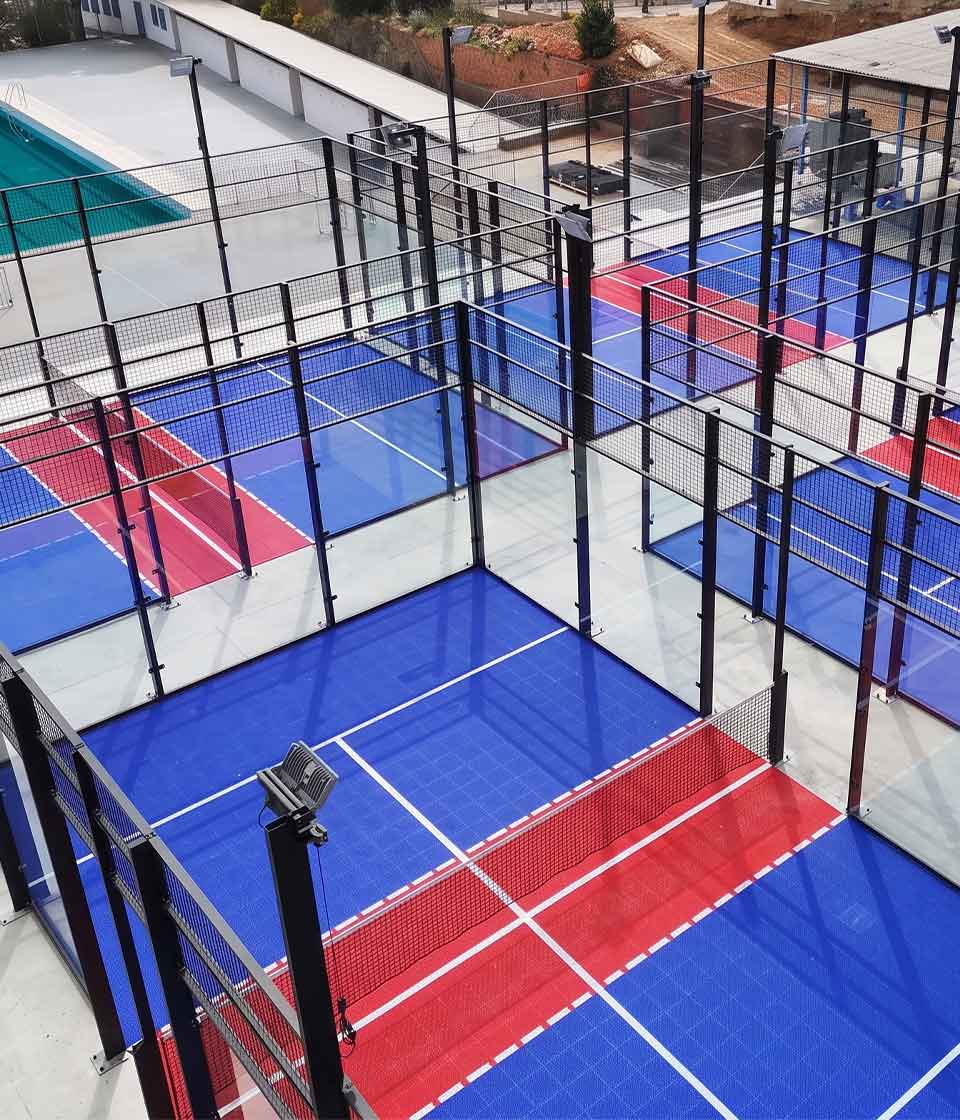
The internal playing area of a standard doubles padel court is 10 x 20 meters. The court is divided in half by a net; glass or suitable wall surfaces and metal fencing are active parts of the game. Under the FIP rules effective as of January 1, 2026, the lines are 5 centimeters wide, and the service lines are located 6.95 meters from the net on both sides. The net is 10 meters long, 0.88 meters high at the center, and no more than 0.92 meters high at the ends.
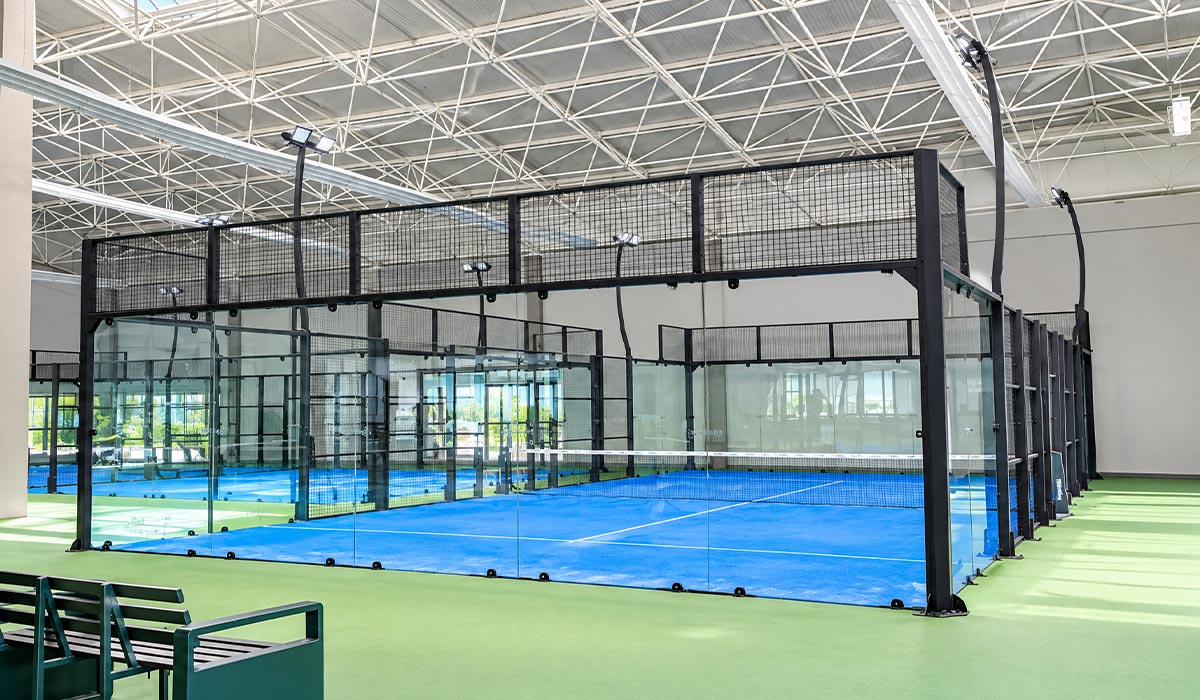
The clear height must be at least 6 meters throughout the court. FIP recommends 8 meters for new facilities. In an indoor building, any column, beam, duct, fixture, or other equipment projecting into the playing volume can affect not only comfort but also standards compliance and safety. Therefore, measurements for indoor projects should be based not merely on the floor-to-ceiling distance but on the actual unobstructed playing volume.
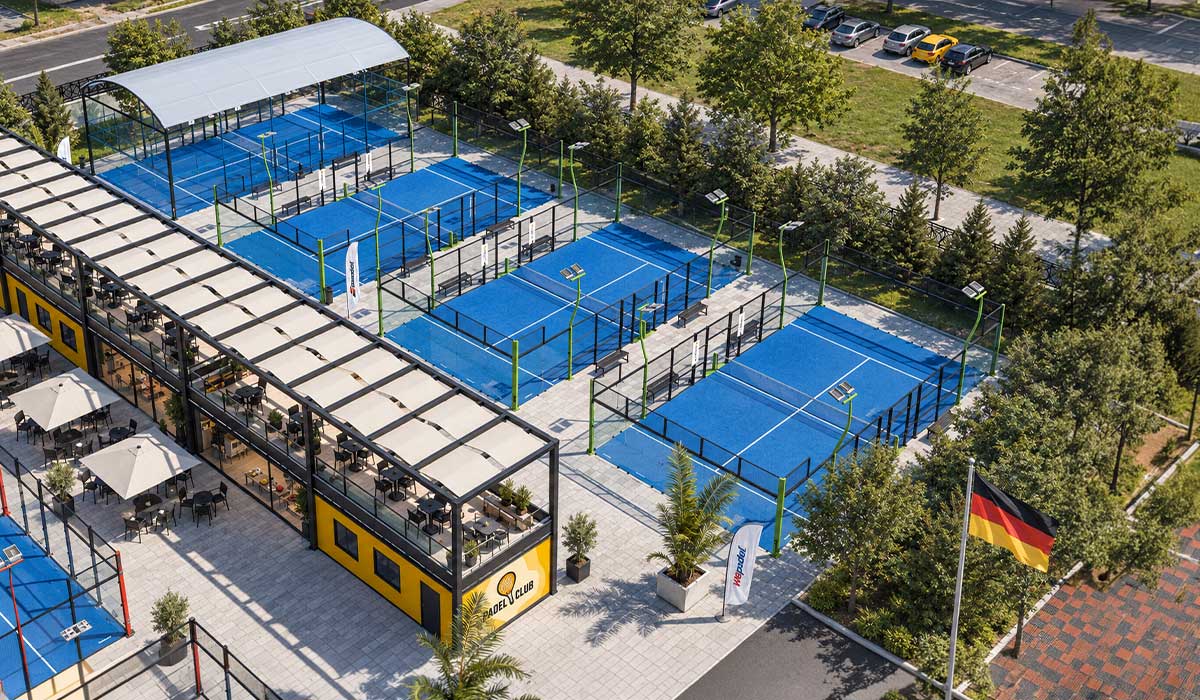
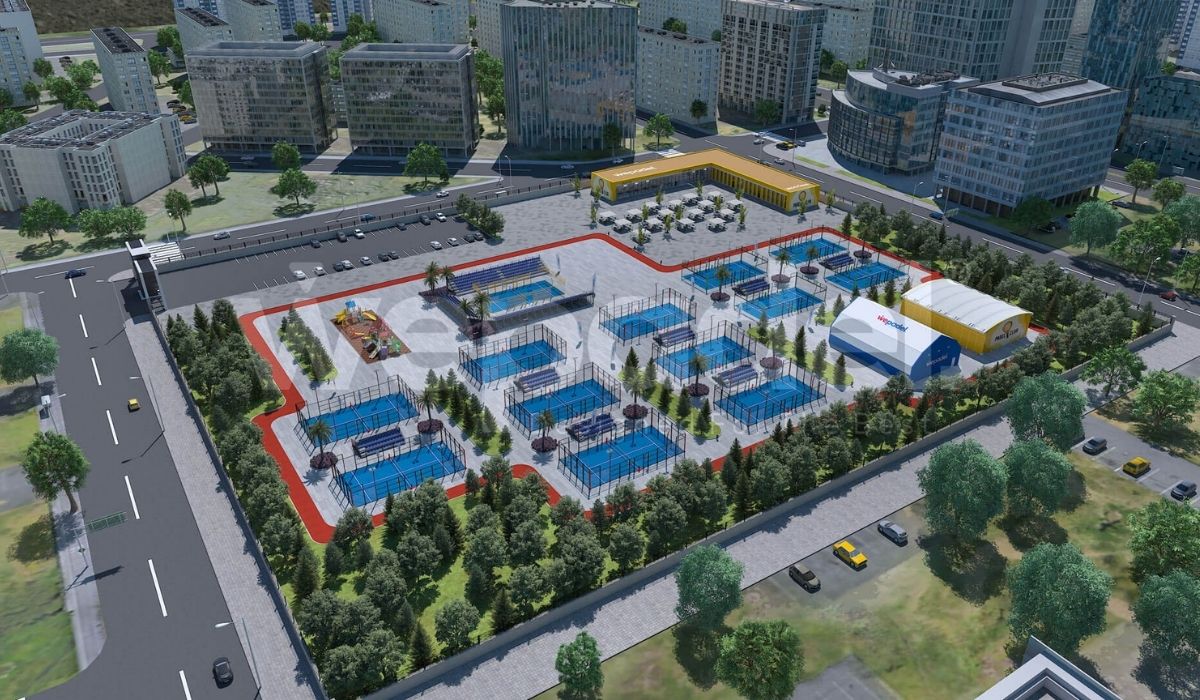
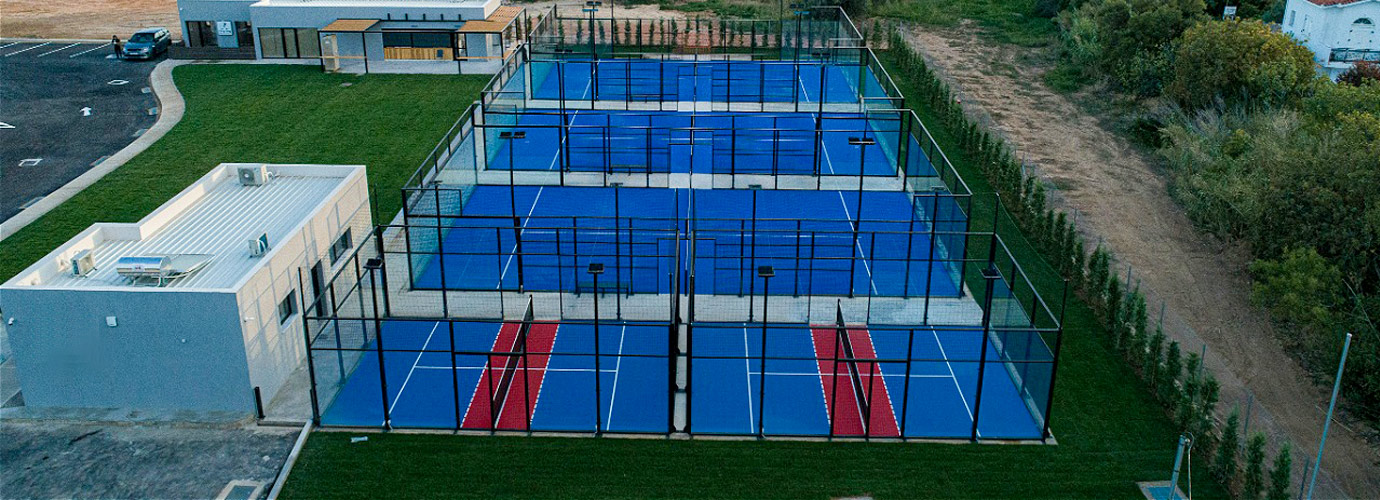
The 200 square meters mentioned here represents only the internal playing rectangle. When calculating the investment area, the external dimensions of the structure, installation tolerance, maintenance corridor, player waiting area, out-of-court playing area, accessible route, emergency egress, reception, changing rooms, technical rooms, and parking should also be included. During early feasibility, a planning envelope of approximately 300-350 square meters per outdoor court may be used for a layout study, but this figure is neither an FIP standard nor a permit dimension. The final area is determined through the architectural and engineering design.
How Is the Right Location Selected?
Not every attractive-looking plot of land or warehouse is suitable for a padel facility. Location assessment should be carried out under four headings: demand, legal usability, technical feasibility, and operational access.
First, the population, income, age distribution, foreign population, and the density of universities, offices, and tourism within 10-, 15-, and 20-minute driving catchment areas should be examined. The prices, occupancy levels, and customer reviews of existing padel, tennis, fitness, and social sports businesses should be compared. Social media interest alone is not evidence of demand. Interviews with potential users, pricing surveys, a waiting list, founding-membership presales, and discussions with companies about block-hour bookings are stronger indicators.
The designated use of the land or building should be compatible with sports facility operations and the planned ancillary uses. The title deed, lease term, building permit or renovation requirements, business licensing process, and fire, noise, accessibility, and signage conditions should be verified on a project-specific basis with the competent authorities. Tying the lease commencement to permitting and handover conditions, including an exit mechanism if permits cannot be obtained, and securing a contract term long enough to cover the investment payback period protect the investor.
The preliminary technical review assesses topography, ground conditions, groundwater, drainage elevation, electrical capacity, sewerage, internet, and vehicle and crane access. In outdoor or roofed projects, wind, snow, seismic, and corrosion conditions must also be considered; in indoor projects, load-bearing capacity, fire egress, ventilation, condensation, acoustics, and clear height require additional attention. If nighttime use is planned, light spill and neighborhood noise should be addressed before the investment decision is made.
Outdoor, Roofed, or Indoor Padel Court: Which Is More Suitable?
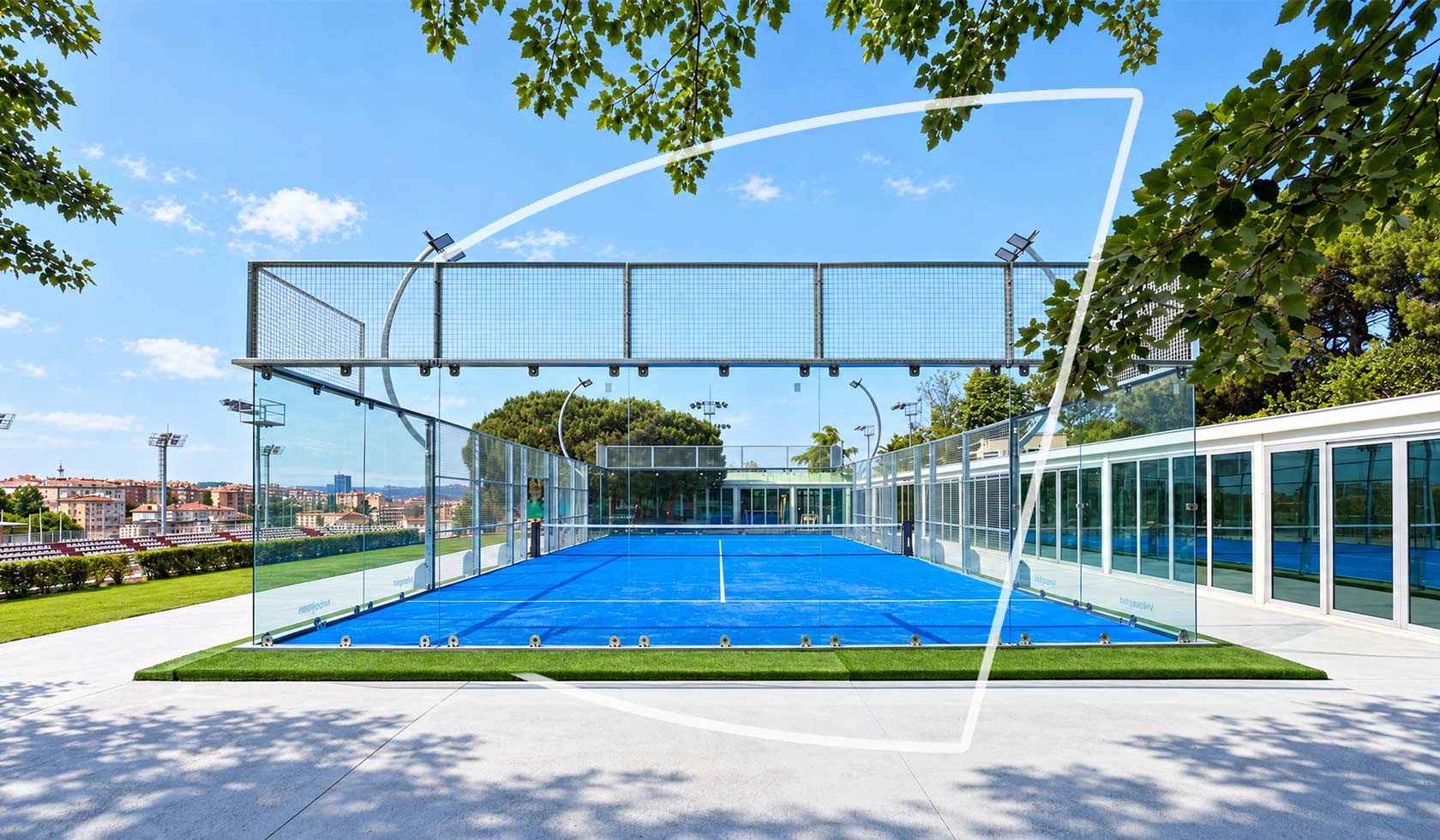
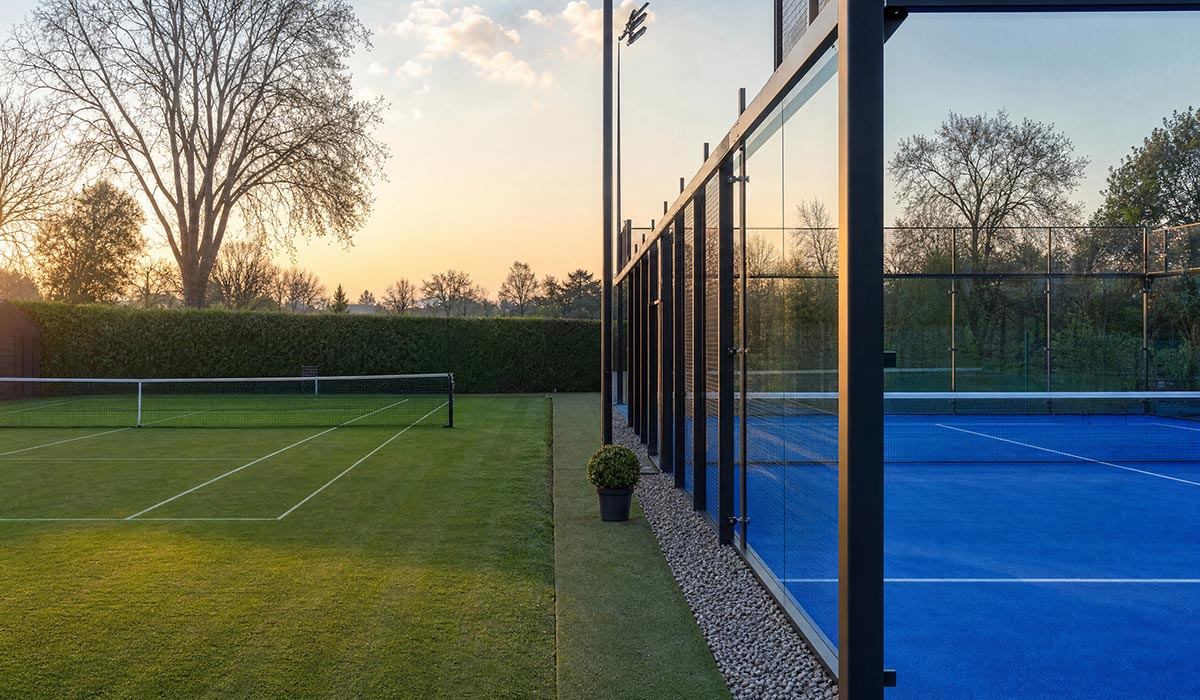
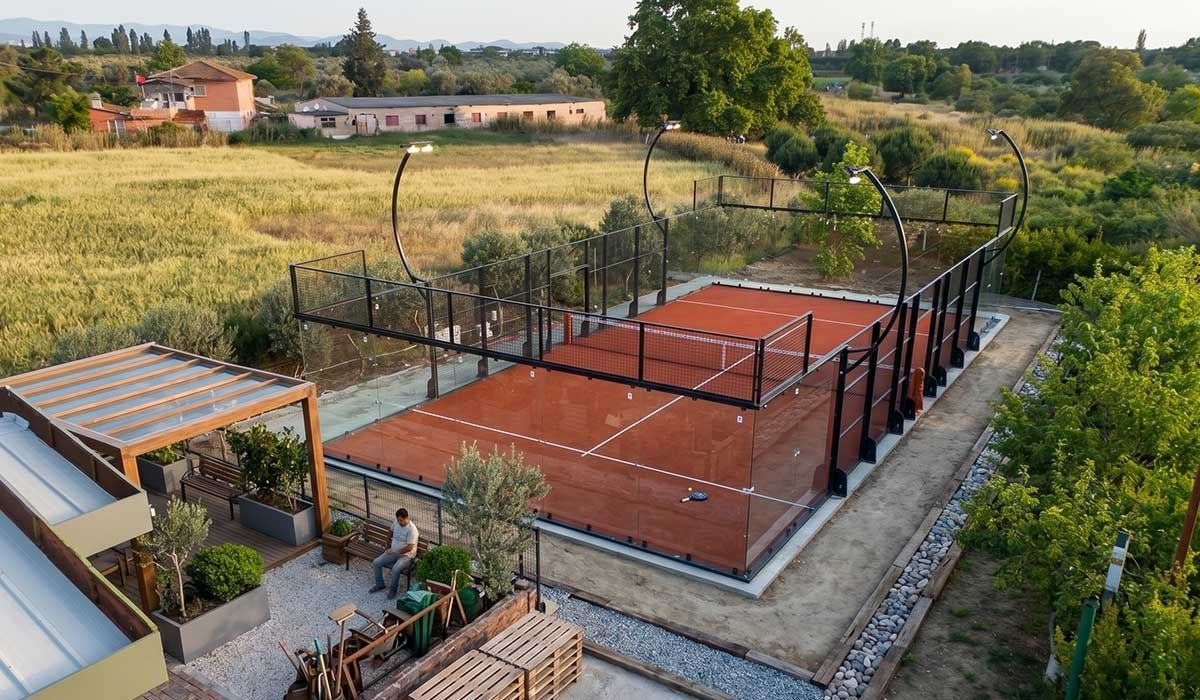
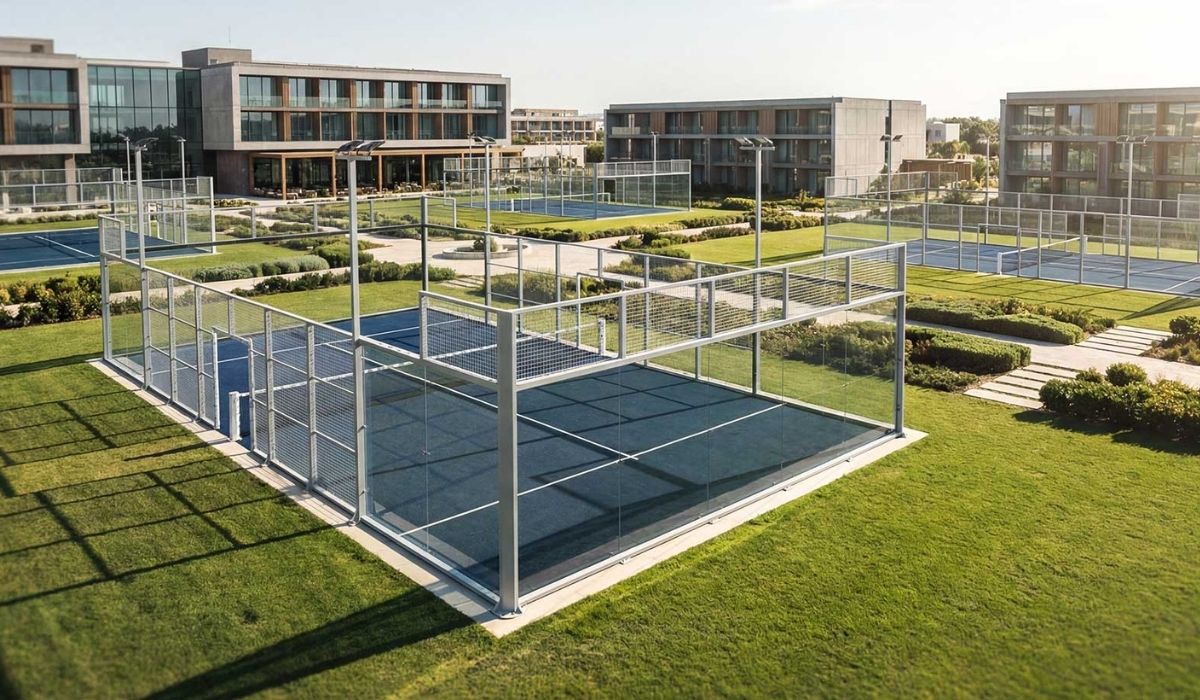
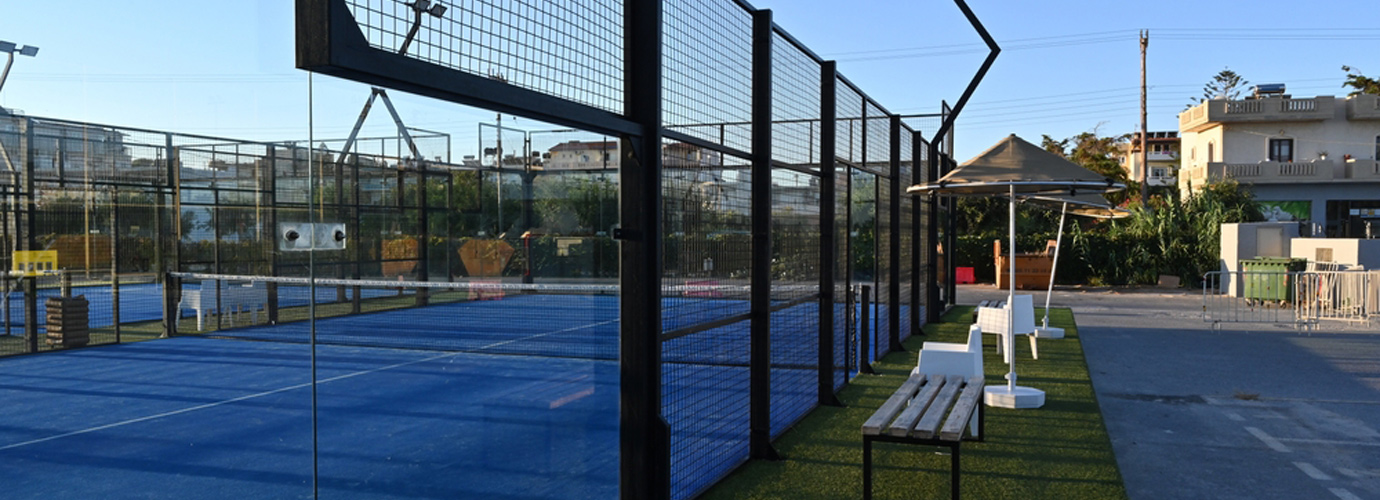
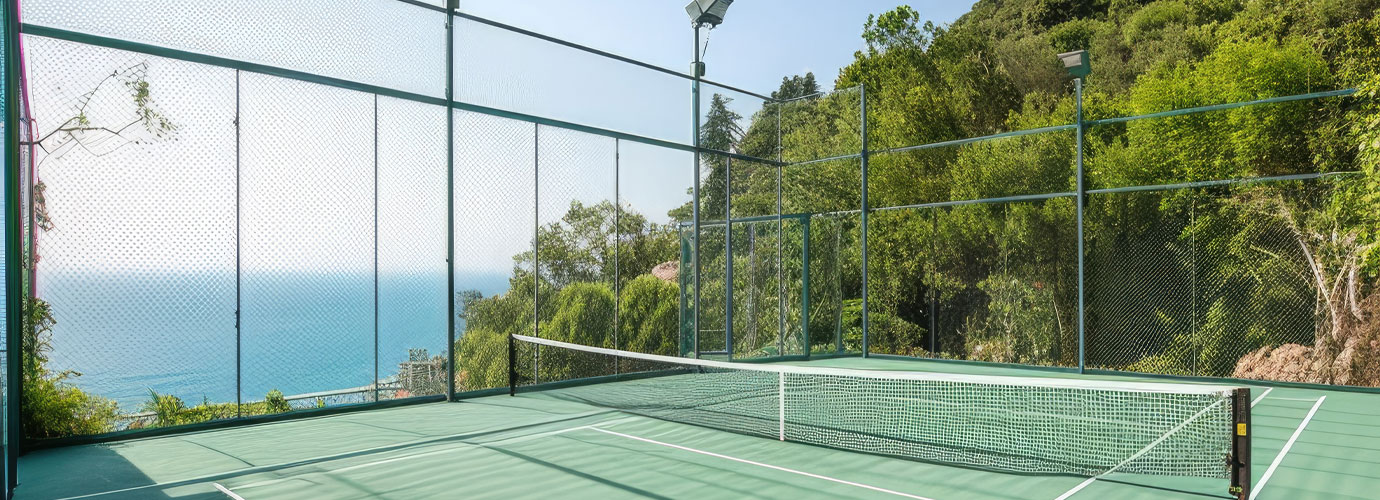
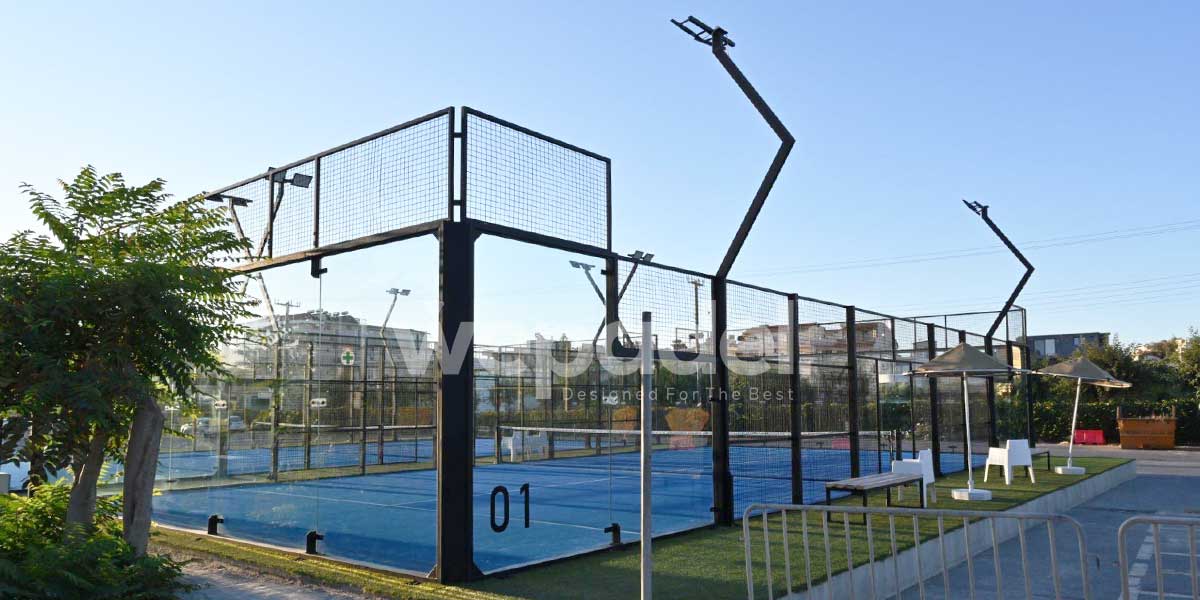
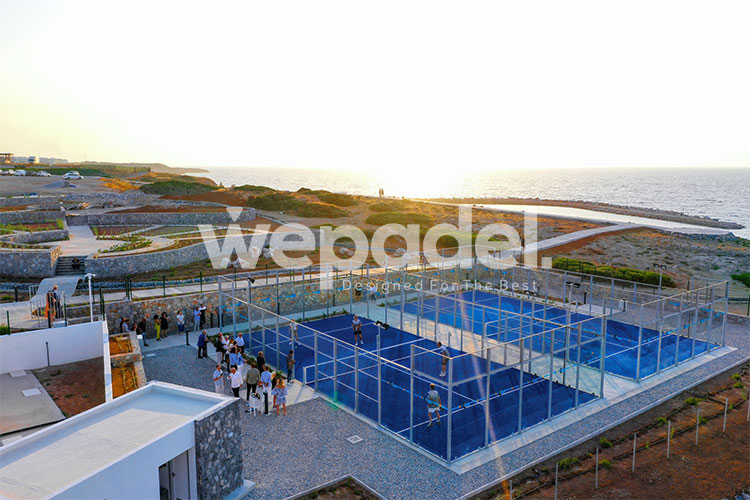
There is no single correct court type. An outdoor padel court may offer a lower initial investment and faster installation potential; however, it may lose sellable hours because of rain, wind, temperature, and sunlight. It may be suitable for a seasonal facility in a mild climate, a hotel, or an addition to an existing social facility.
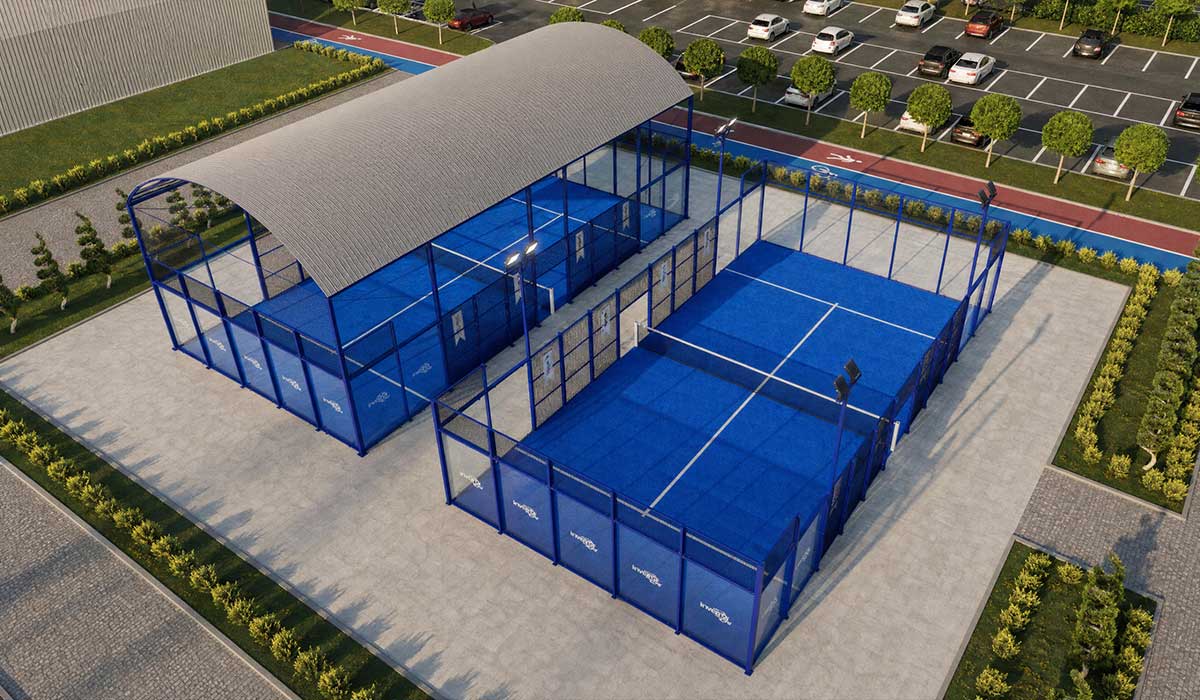
A roofed outdoor court can increase year-round usability by reducing the impact of precipitation and sunlight. However, a roof is not a standard accessory. Wind and snow loads, seismic behavior, foundation reactions, rainwater drainage, permitting, and the cost of additional steel must be resolved on a project-specific basis. It is not safe to assume that a standard roof can simply be added over the court at a later date.
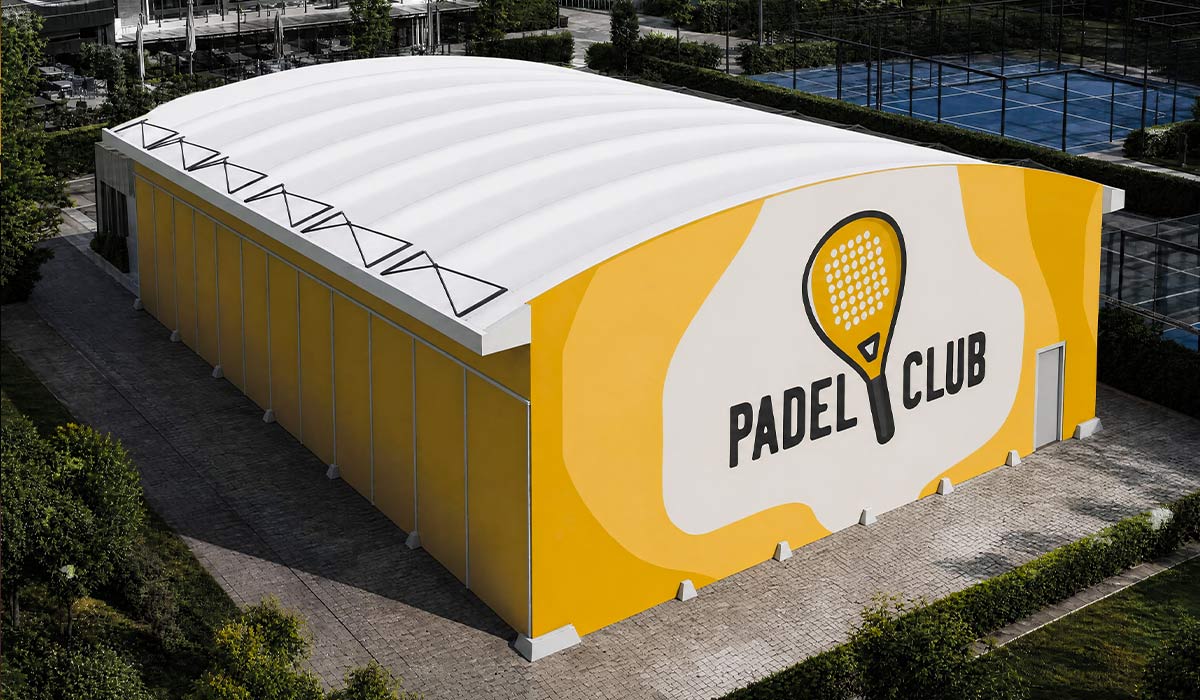
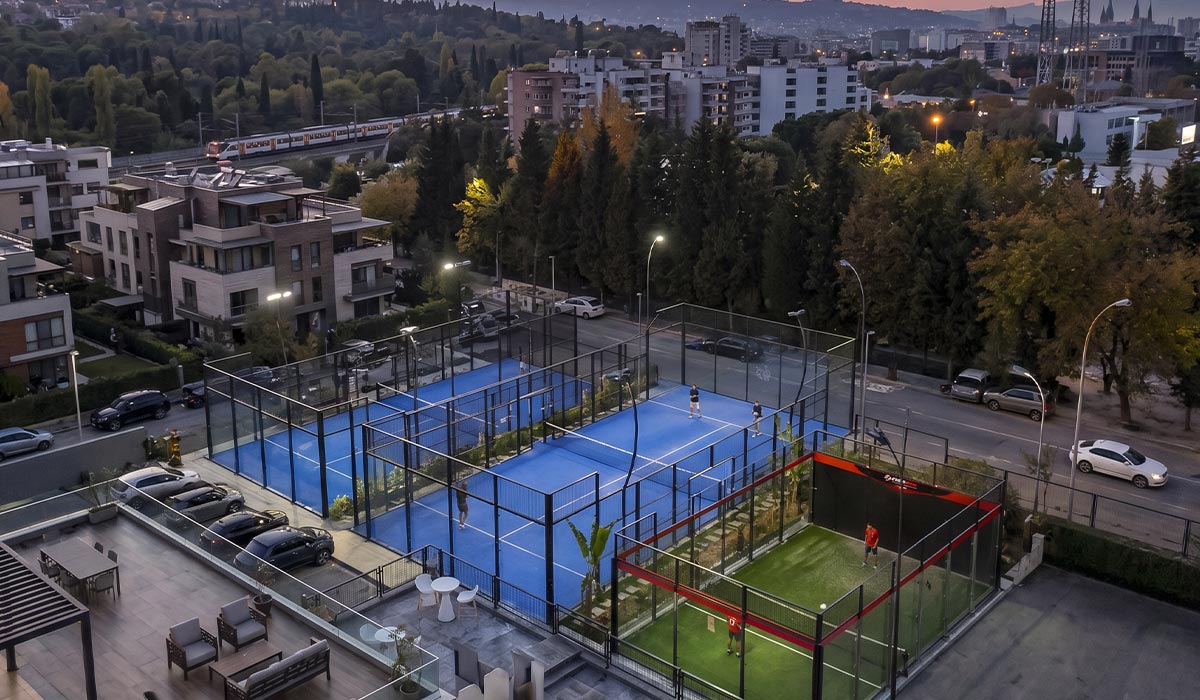
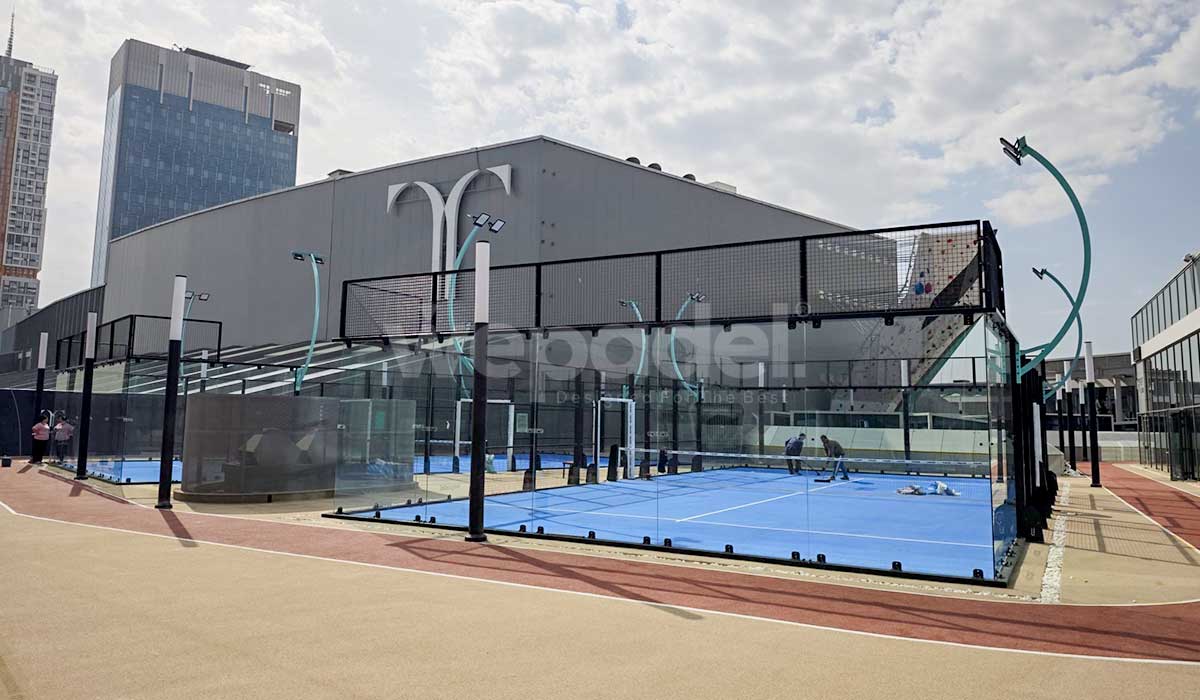
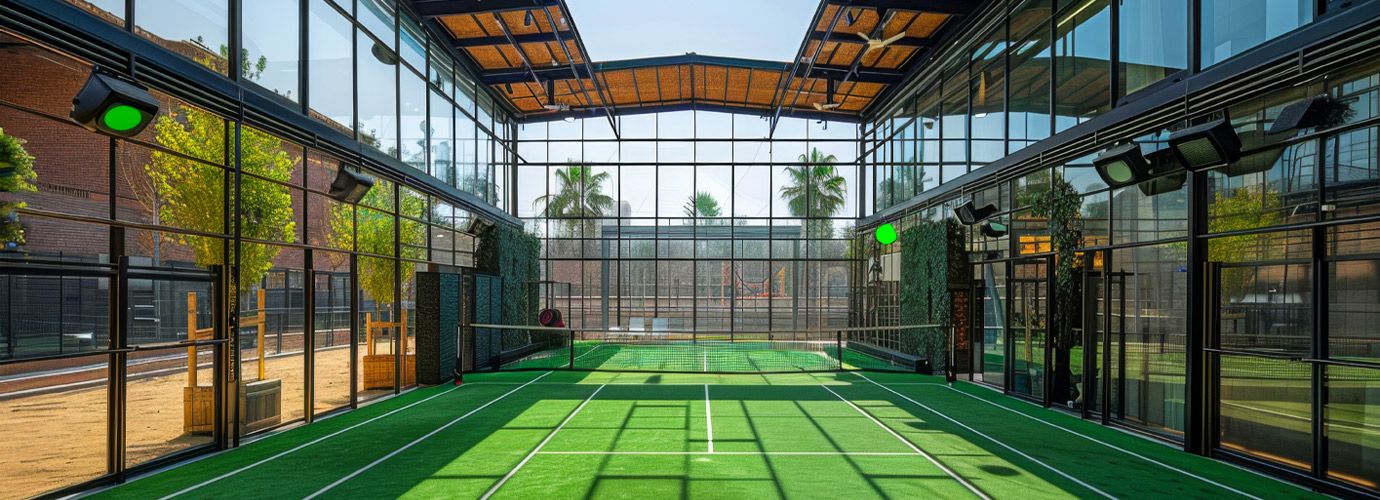
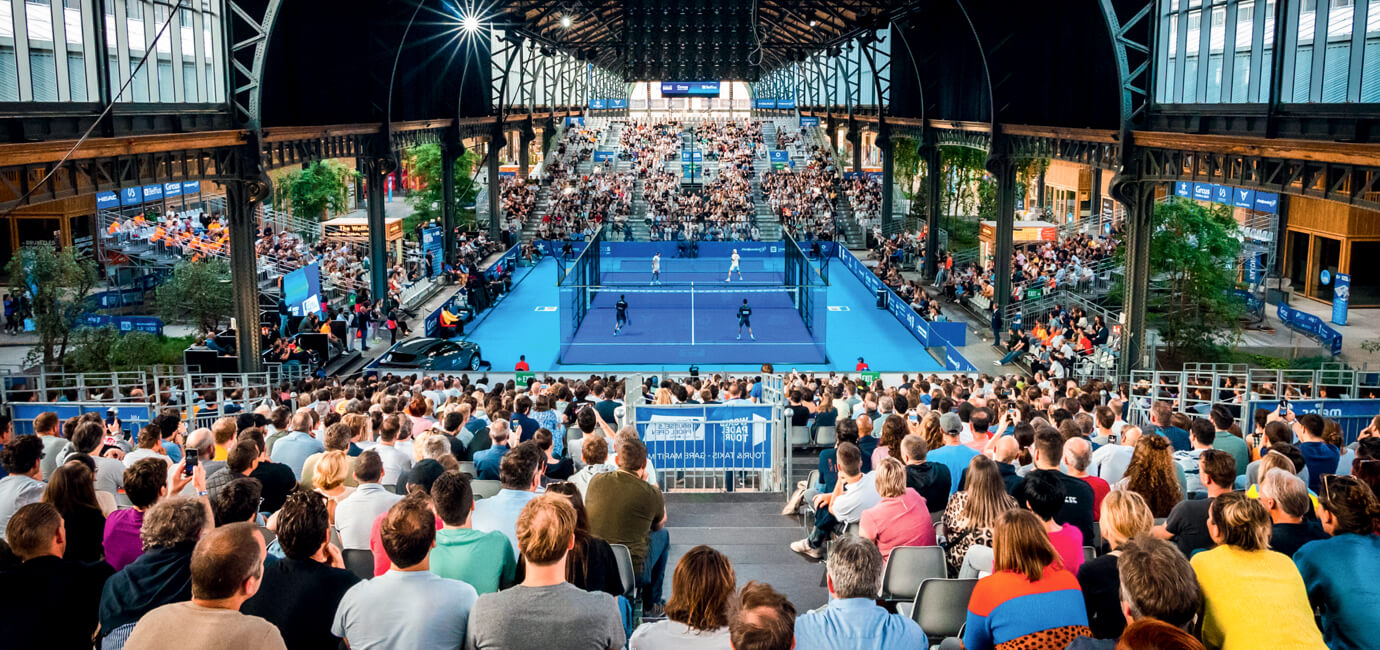
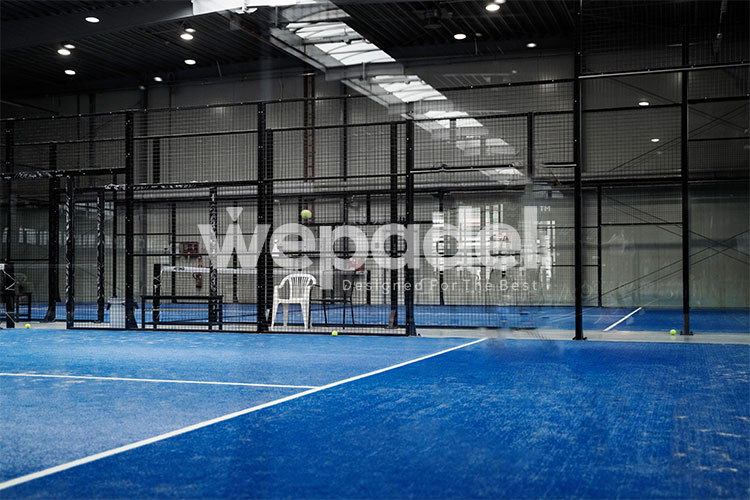
An indoor court provides weather-independent scheduling and user comfort. In large cities, it can be well suited to a model based on regular academies, leagues, and corporate events. On the other hand, building, fire, HVAC, acoustics, lighting, height, and energy costs increase the total investment. Panoramic courts can offer advantages for spectators, broadcasting, and premium brand perception; however, if local customers are not willing to pay more for the difference, the additional CAPEX may not generate a return.
The decision should be based not only on the court price but also on annual net sellable hours. A more expensive roof or indoor building can protect revenue if it sufficiently reduces weather-related cancellations. Conversely, in an area with low demand, a high-specification panoramic or indoor facility may tie up capital unnecessarily.
How Does Padel Court Construction Progress?
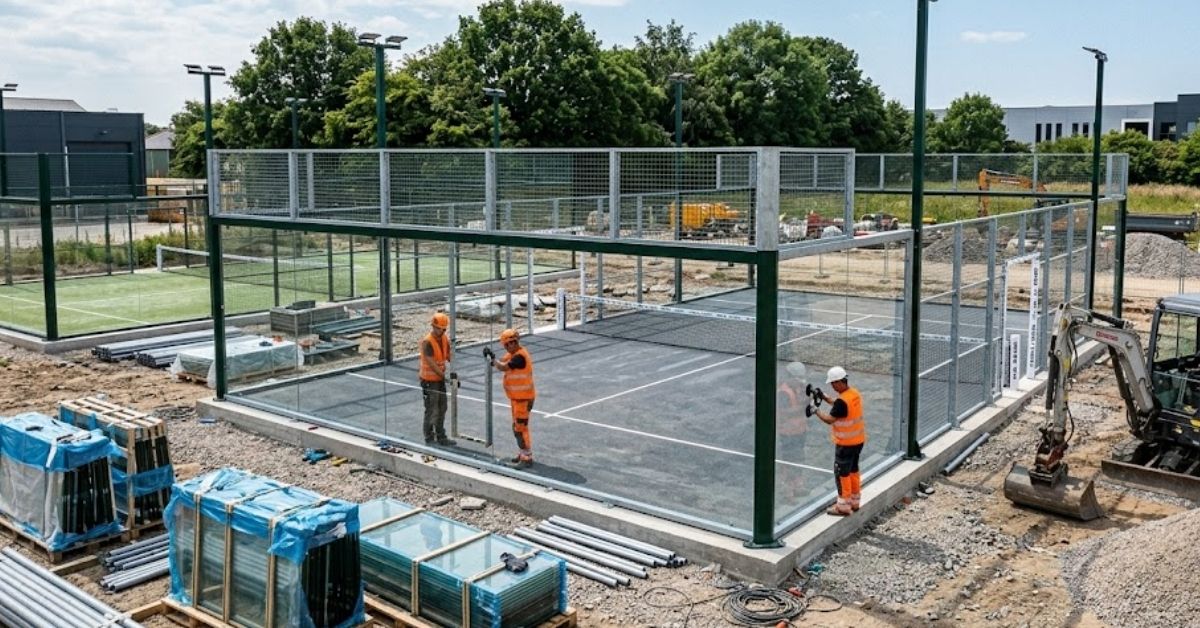
Professional padel court construction can be addressed in ten interconnected stages:
- Project brief and feasibility: The target customer, number of courts, outdoor or indoor model, social areas, tournament objective, investment ceiling, and opening date are clarified.
- Site investigation: Topographic measurements, ground information, existing infrastructure, drainage elevation, electrical capacity, and construction-site access are determined.
- Concept layout: The courts are planned together with circulation, emergency access, reception, changing rooms, café, storage, technical rooms, and expansion areas.
- Permit strategy: Use, construction or renovation, business opening, fire, noise, accessibility, and ancillary business permits are planned in a matrix.
- Construction documents: Architectural, structural, groundworks, drainage, electrical, mechanical, fire, and landscape designs are coordinated.
- Manufacturing and quality control: Steel, glass, fencing, LEDs, turf, and accessories are manufactured in accordance with approved shop drawings; certificates and quality records are checked.
- Infrastructure and foundation: Excavation, filling, compaction, foundations or slab, drainage, conduits, grounding, and anchors are completed in accordance with the local engineering design.
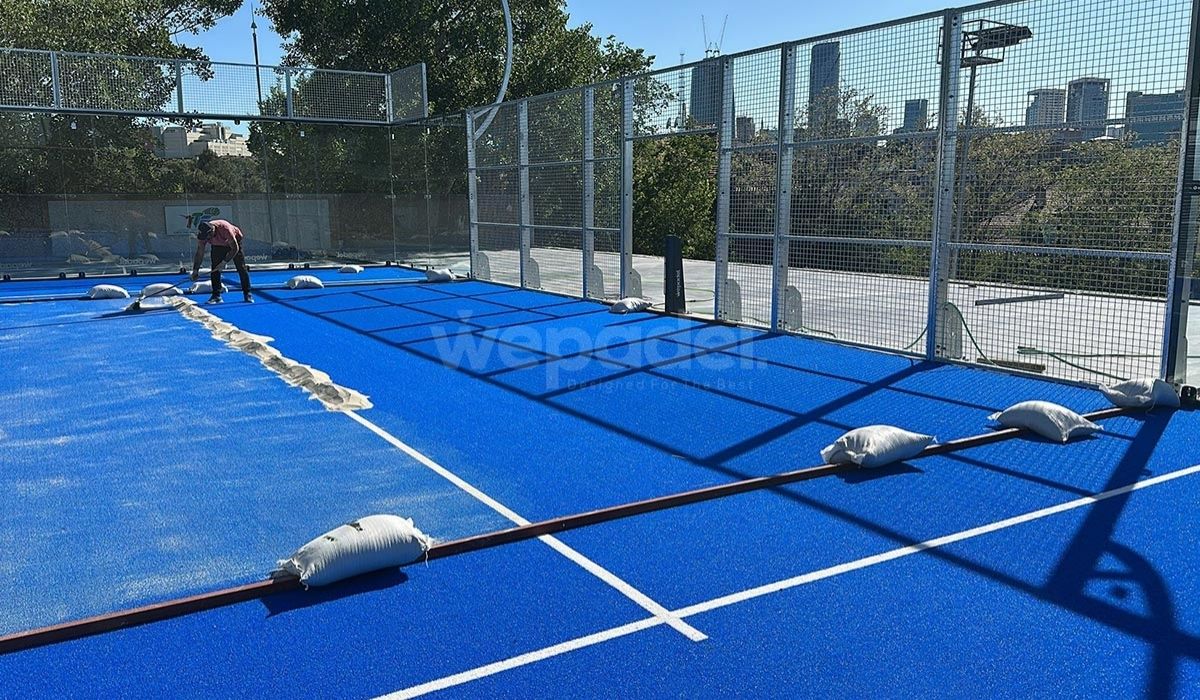
- Logistics and installation: Dispatch sequencing, safe glass storage, lifting plans, steel alignment, correct torque, and turf installation conditions are managed.
- Testing and acceptance: Dimensions, elevations, verticality, glass connections, doors, net, surface, drainage, lighting, and electrical protection systems are tested.
- Handover and opening: As-built drawings, calculations, certificates, warranty documents, maintenance manuals, and training are received; trial games and operational rehearsals are conducted.
The schedule depends on the project's permitting, roof or building, import, weather, and site-preparation conditions. A total planning range of 12-24 weeks may be used during early feasibility, but this is not a commitment. The manufacturer's proposal should show separate timeframes for design, manufacturing, delivery, installation, acceptance, and closeout of outstanding items.
How Much Does a Padel Court Cost?
In Wepadel's reference content dated June 12, 2026, approximate construction costs were stated as EUR 36,000 for a standard padel court, EUR 70,000 for a standard roofed padel court, and EUR 120,000 for an indoor court requiring custom engineering and design. These figures are budget references, not binding proposals.
The final padel court cost varies according to the selected model, glass and steel system, corrosion protection, turf, LEDs, transport, customs, installation, location, ground infrastructure, and project requirements. It should be confirmed in writing whether the price includes VAT, exchange-rate effects, foundations, drainage, electrical supply, crane services, permits, professional services, social areas, and working capital.
The following packages should be tracked as separate line items in the total investment budget: land or building, design and consultancy, infrastructure, court package, roof or building, electrical and mechanical works, social areas, technology, logistics, opening expenses, contingency, and working capital. Before asking, “How much does the court cost?” the investment committee should ask, “What is the total cost of the opening-ready project, and what scope does it include?”
To place proposals on the same basis, each manufacturer should be asked to specify the court model, the boundary of its foundation and infrastructure scope, transport and customs, installation and crane services, electrical connections, taxes, warranty, service, and explicit exclusions. Proposals in different currencies and from different dates should not be compared without converting them using the same exchange-rate assumption.
How Is a Padel Court Manufacturer Selected?
The right padel court manufacturer is not simply the company offering the lowest price. The manufacturer's legal entity, production address, financial capacity, and references operating under similar climate conditions should be verified. At courts visited as references, glass connections, steel corrosion, doors, turf joints, LED performance, and service experience should be examined by speaking with users.
The technical proposal should include model-specific shop drawings and a bill of materials. It should clearly state who will prepare and sign the wind, snow, and seismic calculations appropriate for the project location; the anchor reactions to be transferred to the foundation design; and the steel grade, sections, bolts, welds, and coating system. Glass thickness alone is not a quality indicator. The tempering standard, certification, edge and hole workmanship, traceable labeling, connection system, and panel replacement process should be evaluated together.
The contract should cover included and excluded work, design approval, change management, delivery terms, delay notification, payment milestones, securities, factory and site inspection rights, acceptance tests, the punch list, warranty exclusions, and the dispute resolution method. The phrase “turnkey” alone does not define the scope; responsibility for foundations, drainage, electrical work, crane services, taxes, accommodation, testing, and permits should be stated item by item.
After-sales service is also part of the purchasing decision. The availability of critical spare parts, lead time for glass panels, initial remote response and on-site intervention times, and responsibility for labor, travel, crane services, and transport under warranty should be clarified. When requesting a proposal from Wepadel, sharing the project location, elevation, number of courts, outdoor-roofed-indoor preference, land or building plan, ground information, target opening date, and tournament level will enable the preparation of a more comparable study.
What Do FIP and TTF Criteria Mean for an Investor?
FIP rules define the sporting framework, including court dimensions, enclosures, surface, access, safety, and lighting. The term “FIP compliant” should not be accepted as a general marketing claim; the proposed model should be matched item by item against the current rules. The basic rules of play do not, by themselves, mandate a universal glass thickness; the glass system is evaluated together with the target tournament, manufacturer's system, engineering, and certifications.
The Turkish Tennis Federation's Directive on Sporting Qualification for Padel Courts and Padel Facilities, dated June 4, 2026, introduces sporting criteria and a scoring system for facilities to be used in competitions organized or approved by the TTF. At least 35 points from the technical section and at least 50 points in total are required; a score of zero on any technical criterion prevents certification. Certified, gap-free 12-millimeter tempered glass earns the highest glass score, while a 10-millimeter system earns a lower score. The number of courts, off-court area, ceiling height, booking system, maintenance plan, changing rooms, social areas, parking, and accessibility also affect the star rating.
This sporting qualification certificate does not constitute approval for structural safety, structural engineering, electrical systems, fire safety, occupational health and safety, or a business license. The investor should manage sporting criteria and local regulatory and engineering responsibilities as separate workflows.
How Are Revenue, Break-Even, and Return on Investment Calculated?
The starting point of the financial model is the monthly sellable court hours:
Monthly capacity = Number of courts x Open days x Daily sellable hours
Hours sold = Monthly capacity x Occupancy rate
Court revenue = Hours sold x Realized average hourly price
Instead of the list price, the realized price after discounts, memberships, promotions, free introductory sessions, cancellations, and payment commissions should be used. A three-court facility with 14 sellable hours per day and 30 open days per month has a capacity of 1,260 court-hours. At 30 percent occupancy, 378 hours are sold; at 45 percent occupancy, 567 hours; and at 60 percent occupancy, 756 hours. If the realized hourly price is P, monthly court revenue is 378P, 567P, and 756P, respectively.
For break-even analysis, monthly fixed costs attributable solely to the courts should be separated from the variable cost per hour sold. Required hours sold are calculated by dividing monthly fixed costs by the net contribution per hour; break-even occupancy is calculated by dividing the required hours by monthly capacity. Revenue from lessons, memberships, and the café should be added on separate lines using conservative assumptions.
The simple payback period can be tracked by dividing total project CAPEX by stable annual free cash flow; however, this ratio does not fully reflect the time value of money, financing, or terminal value. The investment decision should also consider downside, base, and upside scenarios; the ramp-up period; working capital; NPV, IRR, and debt-service capacity. Assuming high occupancy from the first month, peak demand throughout the day, or ancillary revenues arising automatically artificially shortens the payback period.
How Do Operations and Maintenance Protect the Value of the Investment?
For a successful opening, community-building efforts should begin before installation. A founding-player list, level survey, introductory sessions, social games, corporate agreements, and coaching content should be prepared before opening. Booking software should be selected for compatibility with partner matching, waiting lists, automated notifications, memberships, pricing tiers, POS, access, and lighting systems.
The management dashboard should track occupancy by day, time, and court. Realized revenue per court-hour sold, revenue per available court-hour, booking lead time, repeat rate, active players, cancellations and no-shows, lesson attachment rate, ancillary spending, maintenance-related closed hours, customer acquisition cost, and incident frequency are key indicators. Looking only at occupancy hides the price mix and revenue quality.
The maintenance program should be organized according to the manufacturer's manual. Glass damage, doors, the net, sharp projections, and slippery areas should be checked at every opening; surface cleaning, drainage, and incident logs daily; turf brushing, sand distribution, and connections weekly. Monthly checks should cover LEDs, electrical panels, emergency equipment, and corrosion; seasonal checks should cover drainage, the roof, and coastal protection; and an annual inspection by the technical team should be planned. Glass breakage, loss of turf and sand performance, LED drivers, door hardware, corrosion repairs, and revenue lost during planned closures should be included in the life-cycle budget.
The Most Common Mistakes in Padel Investment
The most common mistake is basing the total project budget solely on the court proposal. The second mistake is assuming that the 200-square-meter playing area represents the total land requirement. The third mistake is making an irreversible order or payment based on a verbal permitting discussion. Other critical mistakes include:
• Using a standard design without local wind, snow, seismic, drainage, and corrosion data.
• Accepting the terms “FIP compliant” or “turnkey” without documentation and a scope matrix.
• Assuming stable occupancy from the first month of opening.
• Setting a lease term shorter than the conservative payback period.
• Attempting to resolve nighttime noise, light spill, parking, and emergency access at a late stage.
• Knowing the warranty period but failing to ask about labor, travel, crane services, and transport covered under warranty.
• Leaving the community, coaching team, and booking system until after opening.
The investment committee should stop the project if the use and permitting route cannot be confirmed in writing, the manufacturer does not provide calculations and certificates, financing proves insufficient in the downside scenario, or no feasible solution can be found for a safety risk.
Brief Decision Checklist for Padel Investors
Before placing an order, clear answers should be provided to all of the following questions:
• Has real demand from customers willing to pay been demonstrated within the catchment area?
• Is the land or building suitable for sports facility use and the planned ancillary activities?
• Have the outdoor, roofed, and indoor models been compared based on annual net sellable hours?
• Have the ground conditions, drainage, anchors, wind, snow, seismic, and corrosion issues been resolved by authorized specialists?
• Have the current FIP rules and, if targeted, TTF criteria been incorporated into the specification?
• Has the padel court manufacturer submitted the scope, calculations, certificates, warranty, and acceptance tests in writing?
• Does total CAPEX include work outside the court package, contingency, and working capital?
• Does the financial model test the realized price, seasonality, ramp-up, and downside scenario?
• Is the pre-opening community, coaching, booking, and sales plan ready?
• Have the parties responsible for daily, periodic, and life-cycle maintenance and their budgets been defined?
Frequently Asked Questions
1. How long does padel court construction take?
Site installation of a basic court package may be brief; however, the period the investor needs to measure is the total time from the initial idea to a permitted facility that is ready to open. Permitting, foundations, the roof or building, manufacturing, delivery, and weather conditions determine the schedule. At an early stage, 12-24 weeks should be used only as a planning range.
2. Are 200 square meters sufficient for a padel court?
No. Two hundred square meters represents only the internal playing area of a standard padel court. The structure, safety, circulation, maintenance, out-of-court play, social areas, technical rooms, emergency egress, and parking must be planned separately.
3. What is the minimum height for an indoor padel court?
The FIP 2026 rules require at least 6 meters of clear height throughout the court and recommend 8 meters for new facilities. In the TTF scoring system, indoor courts with 8 meters or more receive a higher score.
4. How many millimeters thick should the glass be?
The selection is made according to the manufacturer's system, engineering, certification, and target sporting level. Under the TTF 2026 scoring system, a certified, tempered, gap-free 12-millimeter system receives the highest glass score, while a 10-millimeter system receives a lower score. Thickness alone is not a sufficient measure of quality.
5. How many years does it take for a padel court investment to pay back?
There is no universal or guaranteed period. The outcome is determined by total CAPEX, occupancy, realized prices, rent, personnel, energy, seasonality, financing, and ancillary revenues. Short payback claims based only on an optimistic scenario are not sufficient for an investment decision.
6. Does the TTF sporting qualification certificate replace a business license?
No. The TTF directive provides sporting criteria and scoring; it is not an approval for structural safety, electrical systems, fire safety, occupational health and safety, or a business license.
7. Can a padel court be relocated?
The modular superstructure may be dismantled, but foundations, anchors, turf, glass lifting, and logistics costs limit relocatability. Dismantling, reinstallation, and the impact on the warranty should be stated in the manufacturer's contract.
8. What information is required to request a proposal from Wepadel for padel court construction?
The project location, coordinates and elevation, number of courts, outdoor-roofed-indoor preference, product family, land or building plan, ground information, target opening date, tournament objective, and expected scope should be shared. This information facilitates the preparation of a project-specific and comparable proposal.
Build a Sustainable Investment System, Not Just a Padel Court!
A padel investment creates value when the right location, proven demand, a feasible permitting route, project-specific engineering, a transparent manufacturer contract, and disciplined operations come together. Finding the cheapest court and creating the right investment are not the same thing. A sound decision considers not merely the initial purchase price but also the total opening-ready cost, annual sellable hours, risks, and life-cycle performance.
Wepadel's We Origin, We Professional, and We Premium product families offer different solutions for standard, panoramic, roofed, and custom project requirements. The final model should be selected not by product name alone but according to the location's climate, target users, tournament level, ground conditions, investment budget, and operating plan.
As a first step for your project, share the location, number of courts, your outdoor or indoor preference, target opening date, and land or building plan with Wepadel. This allows padel court construction, technical feasibility, and proposal scope to be assessed using the same data set; you can compare your investment budget against the total opening-ready project rather than the court price alone.